Liability Limits for Seniors in Mississippi
Liability limits are the cap on how much your insurer will pay for injuries or damage you cause to someone else in an accident you're at fault for.
What liability limits pay for
Covers
- Other driver's injuries Medical bills, lost income and related costs for someone you hurt in a crash you caused.
- Other driver's car or property Repair or replacement of a vehicle, fence, mailbox or anything else you damage.
- Your legal defense If the other party sues, your insurer provides a lawyer and covers defense costs up to your limit.
- Passengers in the other car Anyone riding with the other driver who's injured is covered the same as the driver.
- A settlement or judgment If the claim goes to court, the payout still comes from this same limit, not a separate pot of money.
Doesn't cover
- Your own injuries Those are handled by medical payments coverage or your health insurance, not liability.
- Your own car's damage Collision coverage pays to fix or replace your car, regardless of fault.
- A hit and run driver Uninsured motorist coverage steps in when the at fault driver can't be identified or has no insurance.
- Damage from a storm or animal strike Comprehensive coverage handles weather, fire, theft and animal collisions, since nobody else is at fault.
- Costs beyond your limit Once a claim exceeds your limit, you're personally responsible for the rest unless you carry umbrella coverage.
You still need this, and probably more of it than you think
Dropping liability coverage isn't really an option if you want to keep driving legally, so the real question is how high to set your limit. That decision has less to do with your age and more to do with what you have to lose.
If you own a paid off home, hold savings, or have other assets beyond your car, a low limit leaves most of that exposed. A serious accident can produce medical bills and lost wage claims that run well past a minimal limit, and whatever isn't covered becomes a debt you owe personally.
How much you drive matters too. Someone who's mostly off the road after giving up a commute faces less exposure than someone who still drives daily into town or across the state to see family. Fewer miles means fewer chances for a serious crash, but it doesn't mean zero chances.
If your assets are modest and you're not driving much anymore, a higher limit matters less than it would for someone with more to protect. But most people carry more assets than they think once a paid off house and retirement savings are added up, so it's worth taking a real look before assuming you're fine as is.
How a liability claim actually plays out
There's no deductible on your side for a liability claim, since you're not the one being paid. The other party files the claim against your policy, and your insurer investigates to confirm you were at fault before paying anything.
Your insurer will want a police report if one was filed, your account of what happened, and any photos from the scene. If the other driver or their passengers were hurt, expect the process to take longer while medical treatment and costs are finalized before a number is settled on.
The payment covers the other party's losses up to your limit, full stop. It doesn't touch your own car or your own medical bills, and if the claim is large enough to approach your limit, you may want to consult a lawyer, since you could be personally liable for anything beyond it.
Have your policy declarations page handy so you know your exact limits, and keep your insurer's claims number somewhere easy to find, not just saved in a phone you might not have with you.

Liability limits compared to umbrella coverage
Liability limits
This is the base coverage built into your auto policy, and it's required to drive legally in some form. It pays out up to whatever limit you've chosen, and nothing beyond that.
Umbrella coverage
This is a separate policy that sits on top of your auto and home liability limits, kicking in once those are exhausted. It's bought in addition to, not instead of, your auto liability limit.
If you have meaningful assets to protect, raising your auto liability limit first and adding umbrella coverage on top is worth asking about.
Real situations
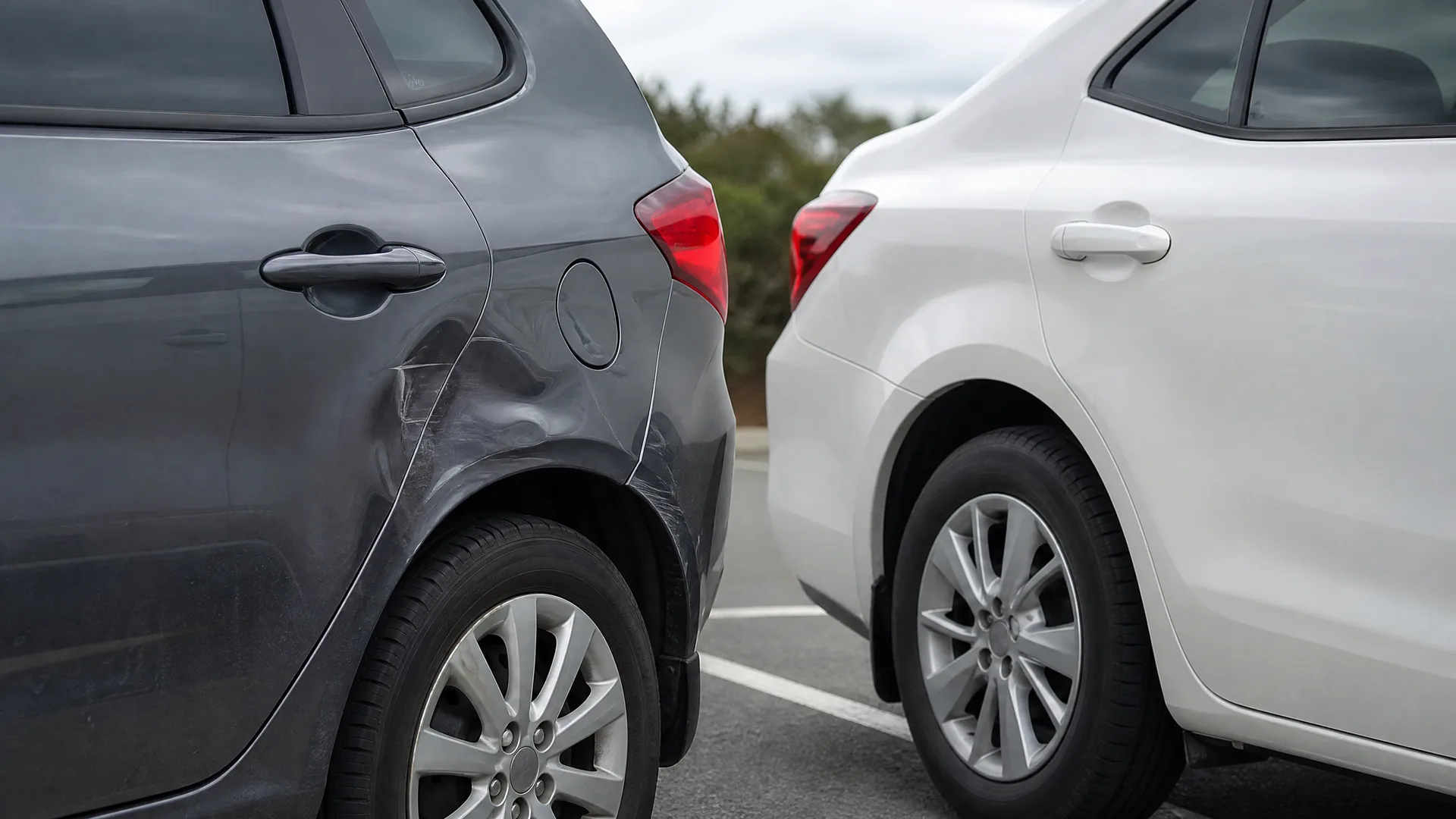
You back out of a parking space at the pharmacy and clip another car, denting its door.
This pays for the other car's repair since the accident was your fault.
A hailstorm hits while your car is parked at church and leaves dents across the hood.
This doesn't pay, since no other driver is involved. Comprehensive coverage handles this instead.
You swerve to avoid a deer on a dusk drive home and rear end the car ahead of you.
This pays for the other car's damage and any injuries, since you're considered at fault for the collision.
Once you've settled on the right liability limit for what you actually have to protect, compare quotes built around that number.
Questions people ask about this
How do I know what my current liability limit is?
Check your policy's declarations page, where it's listed as a set of numbers or a single combined figure. If you can't find it, call your agent or insurer and ask them to read it to you directly. It's worth confirming this rather than assuming, since many people haven't looked at it in years.
Does my liability limit affect my premium?
Yes, raising your limit increases your premium, though usually by less than people expect relative to the added protection. It's worth asking for a quote at a higher limit before deciding it's unaffordable. Many insurers price the jump from a minimal limit to a moderate one fairly modestly.
Can I be dropped for having a low liability limit?
No, carrying a low limit on its own doesn't get you dropped, since it's your choice as long as you meet any required minimum. Insurers are more concerned with your driving record and claims history. A low limit mainly affects what you'd owe out of pocket after a serious accident, not your standing with the insurer.
Should I raise my liability limit if I'm driving less now?
It depends more on what you have to protect than on how often you drive. Even occasional driving can lead to a serious accident, and your exposure to a lawsuit doesn't shrink just because your mileage has. Weigh your assets against the cost of a higher limit rather than your driving frequency alone.
What happens if a claim against me is more than my limit?
You become personally responsible for the amount above your limit, and the other party can pursue your assets or income to collect it. This is the exact gap umbrella coverage is built to close. If this risk worries you, it's worth pricing out both a higher auto limit and a separate umbrella policy.